
Cosmetic Ingredient Stability Plays a Critical Role in Ensuring Skincare Product Efficacy and Safety
Xi’an, Shanaxi, China – November 23, 2026
Ever noticed how a skincare product can look totally fine on the outside, but inside, the ingredients are slowly reacting to light, heat, oxygen, or even water? Like, that vitamin C serum you left on a sunny bathroom shelf might start to darken, or a cream that goes through temperature swings could change its texture. These little things make you wonder: why does ingredient stability even matter in skincare? Honestly, it’s about how consistently a formula performs from the very first pump to the last drop.Stability isn’t just about one thing, you know? Formulators have to look at the whole picture – pH, preservatives, packaging, and how all the ingredients interact with each other. They run controlled tests to spot any changes, like in appearance, odor, texture, or the measured levels of key components. And here’s the thing: even tiny shifts can matter a lot. But just because a product looks and smells perfectly normal doesn’t automatically mean it’s stable. And sometimes, the chemical changes aren’t visible at all – what you see on the outside doesn’t tell you everything. That’s a distinction that often gets overlooked, but it’s really important.You know, getting a handle on stability can actually help you store products way more sensibly and also figure out what that whole shelf-life thing really means. I mean, simple stuff like closing the lid, keeping things away from prolonged heat, and just following the directions on the package—those habits do a lot for keeping quality up. But honestly, they can’t do much to rescue a formula that was poorly designed in the first place. This actually connects to a bunch of other personal-care categories, too. Take hydrolyzed keratin in hair products, for instance—it raises similar questions about ingredient quality and whether it’ll play nice with the rest of the formula. At the same time, stability isn’t exactly a guarantee that something will work for everyone, in every situation. Testing methods have their limits, and let’s face it, how products are stored in the real world can be all over the place. Honestly, if you actually dig into the science a bit, you’ll see what stability is all about – and what it definitely can’t guarantee. That’s also why thoughtful formulation is such a big deal, even if it’s easy to overlook.
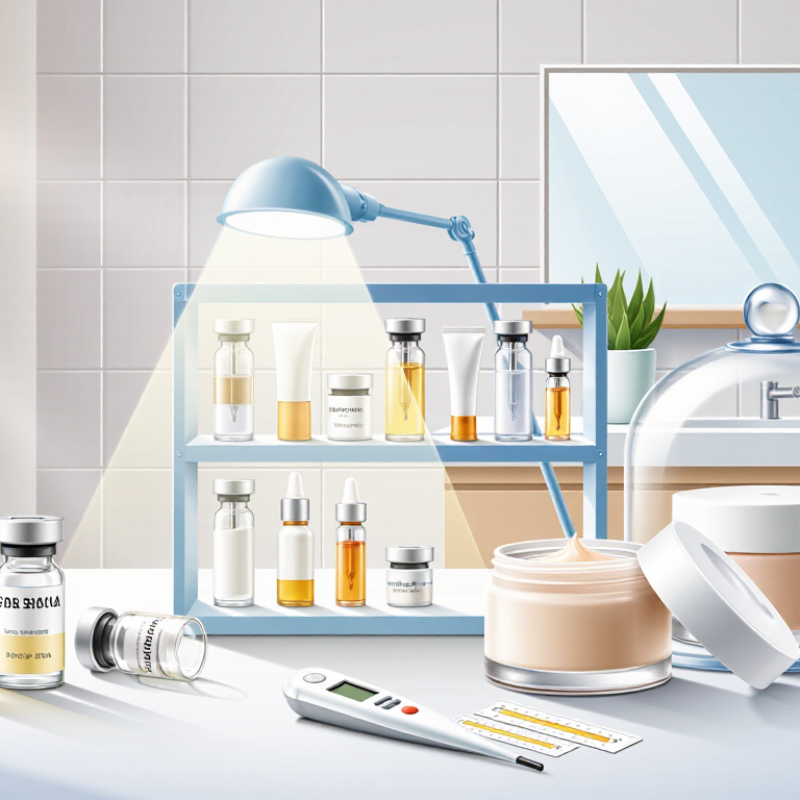 What Cosmetic Ingredient Stability Means in SkincareWhy Is Cosmetic Ingredient Stability Important in Skincare?What Cosmetic Ingredient Stability Means in Skincare
Cosmetic ingredient stability describes how well ingredients retain their intended properties during storage and use. A formula can change when exposed to heat, light, air, or moisture. Vitamin C may darken as it oxidizes; a cream may separate or develop an unusual smell. These are clues, not proof, of a safety problem. Small shifts matter.
Stability testing checks a product over time under selected conditions. In practice, samples may be stored in warm cabinets, under light, or in the packaging intended for sale. Labs monitor appearance, odor, pH, texture, and ingredient levels. Packaging matters too: a loose cap can let air in, while a clear bottle may expose light-sensitive ingredients. Real bathrooms are less controlled than labs.
Microbial protection is another part of product quality. ISO 11930:2019 describes preservative efficacy testing that follows microbial counts at intervals including 7, 14, and 28 days. That timeline helps assess whether a formula resists contamination after deliberate challenge; it does not replace broader stability checks. ISO/TR 18811:2018 also offers guidance for designing cosmetic stability tests. Results depend on the formula, packaging, and storage conditions. No single test predicts every bathroom shelf, and accelerated testing has limits. That uncertainty deserves attention.
Factors That Can Change Skincare Ingredients Over Time
Skincare ingredients can change when they meet air, light, heat, or water. A Cosmetic Ingredient may slowly oxidize after a jar is opened, especially if the lid stays off on a warm bathroom counter. Light can also affect sensitive ingredients, while heat may speed up reactions within a formula. Even repeated exposure matters. Small changes add up.Packaging and daily habits play a part. A pump can limit air contact better than a wide-mouth jar, where fingers and bathroom moisture enter with each use. Water may also encourage microbial growth if preservation is inadequate. Some ingredients, such as vitamin C, are especially prone to oxidation; others may separate or lose strength under poor storage conditions. Not every change is obvious. A product can look and smell normal while its performance has shifted. That is easy to forget.I used to assume a sealed cap meant a formula stayed unchanged. That was too simple. Check the label’s storage guidance, close the container promptly, and avoid leaving it in direct sun or a hot car. If its texture, color, or smell changes noticeably, stop using it and review the product instructions.
Why Is Cosmetic Ingredient Stability Important in Skincare? — Factors That Can Change Skincare Ingredients Over Time
| Ingredient or Ingredient Group | What Can Affect Stability? | Possible Changes Over Time | Common Formulation or Storage Measures | Why It Matters |
|---|---|---|---|---|
| Retinoids, such as retinol | Light, oxygen, heat, and incompatibility with other formula components can contribute to degradation. | Active content may decline; the product may develop changes in color or odor. | Use protective packaging, limit exposure to air and light, and validate the formula under appropriate stability conditions. | A reduction in active content can make product performance less consistent. |
| L-ascorbic acid (vitamin C) | Oxygen, light, heat, water, and formula pH can influence its stability. | Oxidation may cause yellowing or browning and reduce the amount of active vitamin C. | Control the formula’s pH, reduce air and light exposure, and select packaging suited to the formula. | Oxidation can affect both appearance and the amount of usable ingredient. |
| Unsaturated plant oils | Oxygen, heat, and light can accelerate oxidation; the degree of susceptibility varies with fatty-acid composition. | Rancid or altered odor, color changes, and formation of oxidation products may occur. | Store away from heat and light, limit air exposure, and consider suitable antioxidants in the formula. | Oxidized oils may have an unpleasant sensory profile and may be less suitable for use. |
| Peptides and some proteins | Extreme pH, heat, water, and enzymes or other reactive ingredients may affect certain peptides and proteins. | Depending on the ingredient, degradation or changes in solubility and formula performance may occur. | Choose compatible pH and processing conditions, and assess the specific ingredient in the finished formula. | Stability varies by molecule, so ingredient-specific testing is important. |
| Niacinamide | It is generally stable in many cosmetic formulas; prolonged exposure to strongly acidic or alkaline conditions, especially with heat, can increase degradation. | Under harsh conditions, some niacinamide may convert to nicotinic acid. | Use a suitable formula pH and evaluate compatibility and stability in the complete product. | Stability depends on the formula and storage conditions, not just the ingredient name. |
| Preservatives | pH, interactions with other ingredients, and distribution between the water and oil phases can influence preservative availability. | Preservative performance may be insufficient even when the product looks and smells unchanged. | Choose a compatible preservation system and verify protection with appropriate microbiological testing. | Appearance alone cannot confirm that a water-containing product remains microbiologically protected. |
| Emulsions (oil-and-water products) | Temperature changes, freeze–thaw cycles, incompatible ingredients, and inadequate emulsifier systems can destabilize an emulsion. | Separation, changes in thickness, or a different texture may develop. | Use a suitable emulsifier system and assess the finished product under relevant storage and temperature conditions. | Physical stability affects product consistency and ease of use. |
| Water-based formulas containing dissolved ingredients | Evaporation, temperature changes, pH shifts, and interaction with packaging can alter the formula. | Concentration, clarity, viscosity, or ingredient solubility may change. | Use appropriate packaging, control pH, and check the product’s physical and chemical stability over time. | Changes can affect how evenly a product applies and how consistently ingredients are delivered. |
Note: Stability depends on the complete formula, packaging, manufacturing process, and storage conditions. A change in appearance or odor can be a warning sign, but a product that looks unchanged is not necessarily stable; shelf life should be established through appropriate testing.
How Ingredient Instability Affects Safety and Product Performance
Why Is Cosmetic Ingredient Stability Important in Skincare?How Ingredient Instability Affects Safety and Product PerformanceA skincare formula can change after it leaves the lab. Heat, light, air, and shifts in pH may gradually weaken sensitive ingredients. Vitamin-based ingredients, for example, can lose activity through oxidation, while an emulsion may separate into watery and oily layers. Small changes matter. A product that looks or smells different may no longer perform as intended.Instability does not automatically mean a product is unsafe. Still, changes in texture, color, or odor can signal that a formula needs investigation. If preservatives become less effective, the product may be more vulnerable to microbial growth. If the formula’s balance shifts, some users may also experience irritation. The risk depends on the ingredients, packaging, and storage conditions; appearance alone cannot confirm safety.Stability testing helps assess how a formula holds up over time and under different conditions. A Supplement Ingredient used in a skincare formula should be assessed for compatibility with the other ingredients, not judged in isolation. Packaging matters, too: an opaque, tightly closed container can limit light and air exposure. Even so, testing cannot perfectly recreate every bathroom shelf. That limitation deserves attention, not a guess.
Methods Used to Evaluate Stability in Skincare Formulations
Stability testing shows whether a skincare formula keeps its intended quality over time. It is more than checking whether a cream still looks smooth. Changes in temperature, light, air, and contact with packaging can affect texture, scent, pH, or active ingredients. No single test tells the whole story.Labs may store samples at different temperatures, then track changes at set intervals. Accelerated tests use warmer conditions to reveal possible weaknesses sooner, while real-time studies show how a product behaves during ordinary storage. Freeze-thaw cycles can expose separation or graininess. Light exposure may reveal fading or odor changes. Researchers also measure pH, viscosity, color, and, when relevant, active ingredient levels. Packaging compatibility checks look for leaks, discoloration, or product interactions with the container. Preservative testing can assess whether protection against microbial growth remains effective. Search phrases such as Ingredient Moisturizer Skintific may guide shoppers, but they cannot establish a product’s stability. Results depend on the formula and test conditions. A neat result on one sample is not a guarantee; batch variation deserves attention too. Testing should reflect how the product will actually be stored and used.
Packaging and Storage Practices That Help Preserve Stability
Why Is Cosmetic Ingredient Stability Important in Skincare?Packaging and Storage Practices That Help Preserve StabilityPackaging is part of a formula’s protection. Air, light, heat, and repeated finger contact can gradually change color, odor, texture, or active performance. An opaque, well-sealed pump can limit exposure, but it cannot fix an unstable formula. Check packaging compatibility during testing: leakage, swelling, discoloration, or uneven dispensing may signal a problem. ISO/TR 18811:2018 recommends product-specific stability protocols; it does not prescribe one universal pass-or-fail recipe.Store products away from sunny windows, radiators, and steamy bathrooms. Keep caps closed, and use clean, dry hands. These habits matter for Skincare Actives, which may respond differently to light, oxygen, or temperature. For microbial protection, ISO 11930:2019 Criterion A includes measurable benchmarks: a 3-log bacterial reduction by day seven, and a 1-log yeast reduction by day seven. Mold reduction is assessed by day fourteen, with no later increase through day twenty-eight. These are test criteria, not a guarantee for every product or package.Tips: Record storage conditions during stability trials. Compare samples in their final packaging, not just laboratory containers. And check the dispenser after repeated use; that small detail is easy to miss.
Why Stability Testing Matters: Temperature and Humidity Conditions
Reference storage conditions from ICH Q1A(R2), a pharmaceutical stability-testing guideline—not a cosmetic-specific requirement. Relative humidity (RH) is shown in each category.

What this means for skincare: Heat, light, and air exposure can affect sensitive ingredients. Choose packaging suited to the formula—such as opaque or air-restrictive containers when appropriate—and keep products tightly closed, away from direct sunlight and excessive heat. Follow the product’s labeled storage instructions; actual stability depends on the formulation and package.
How Stability Influences Skincare Product Quality and Shelf Life
A cream can look smooth in the jar and still change with time. Heat may thin an emulsion; light and oxygen can dull color or alter fragrance. These shifts can affect how evenly a product spreads and how reliably it performs. Small changes matter.
Microbial quality matters, too. ISO 17516:2014 sets limits for cosmetic products: up to 1,000 colony-forming units per gram or milliliter for most products, and 100 for products used around the eyes, on mucous membranes, or by children under three. The standard also requires specified microorganisms to be absent. These limits are useful benchmarks, but they do not prove that every formula will remain stable throughout its shelf life.
That takes testing.Formulators assess samples under controlled heat, cold, light, and storage conditions, checking appearance, odor, pH, viscosity, and packaging compatibility over time. Real-time testing adds an important check, since accelerated aging cannot perfectly reproduce months in a bathroom cabinet. A pump can clog; a jar can admit air and moisture. Shelf life depends on the formula, package, and storage conditions together. A tidy lab result is helpful, not the whole story.
Conclusion
Cosmetic Ingredient Stability In Skincare Products refers to how well a formula’s ingredients retain their intended qualities over time. Heat, light, air, moisture, and interactions between ingredients can cause changes in a product’s color, scent, texture, or effectiveness. If a formula becomes unstable, it may not perform as expected and could be less suitable for use, making stability important for both product quality and user confidence.Formulators evaluate stability by observing how products respond to controlled storage conditions and by checking for physical or chemical changes over time. Appropriate packaging can limit exposure to air, light, and moisture, while following the product’s storage instructions can help preserve its condition. Together, careful formulation, testing, packaging, and storage support consistent performance and help determine a product’s practical shelf life.
About Us
Le-Nutra is a biotechnology enterprise with good reputation in the industry, and has been devoted to natural Ingredients for 14 years.
We are dedicated to the research, production and marketing of Natural, healthy and innovative raw materials widely used in the fields of Nutraceuticals, Foods and Beverages, Cosmetics&Personal Care Products.
Media Contact
Company Name: Xi’an Le-Nutra Ingredients Inc
Contact Person: Media Relations
Email: Send Email
Country: China
Website: https://www.lenutra-bio.com/


